Transmission Tutorial: CVT vs Manual Clutch vs Centrifugal Clutch — What's the Difference and How Each Works
CVT, wet multi-plate manual clutch, centrifugal clutch — every Malaysian bike uses one of these, and they behave completely differently. Here's exactly how each works and which bikes use what.
MySpeedParts Team
· 6 min read
Three transmission types, three completely different feels
If you've ever swapped between riding a Y15ZR and an NVX155, you've felt it immediately — one needs a clutch lever and a foot shifter, the other doesn't need either. That difference comes down to which transmission type the bike uses. In the Malaysian market, that's almost always one of three systems: CVT, wet multi-plate manual clutch, or centrifugal clutch.
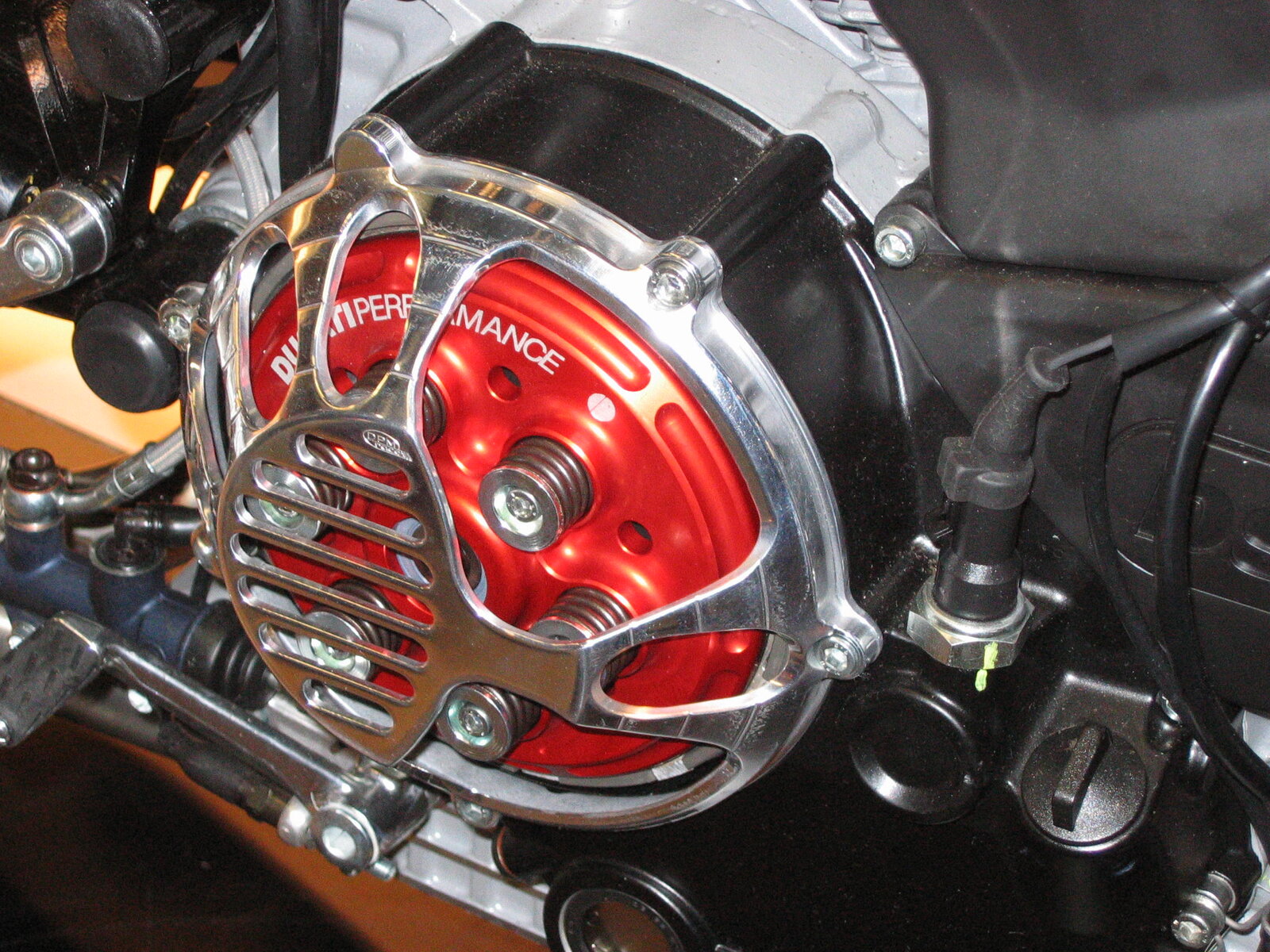
Photo: Gérard Delafond — Wikimedia Commons (CC BY-SA 3.0)
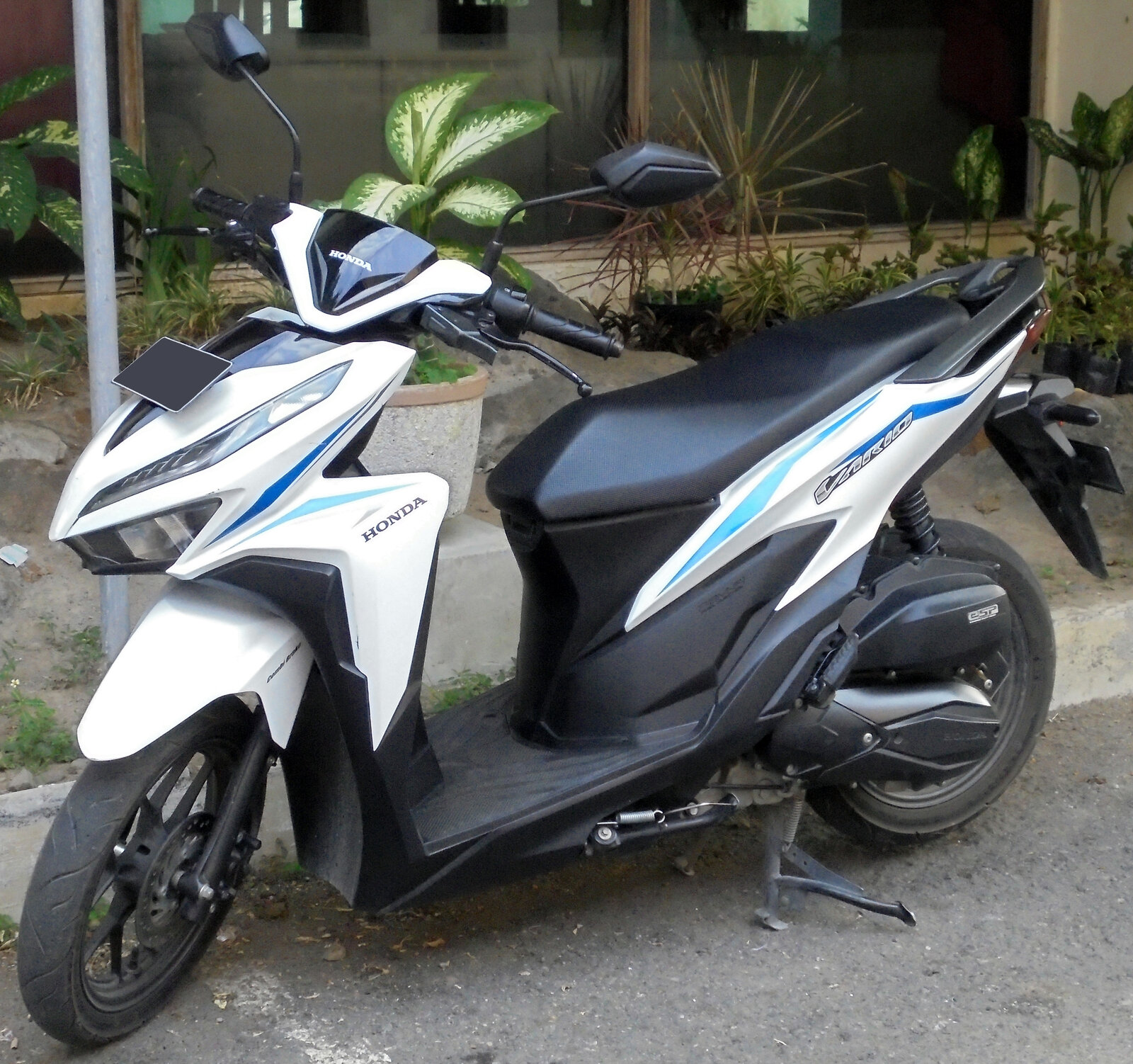
How a CVT works (scooters: NVX155, PCX160, Aerox, X-Ride)
A CVT has no fixed gears at all. Instead, it uses:
- A drive pulley (connected to the engine crankshaft) made of two cone-shaped halves that can move closer together or further apart
- A driven pulley (connected to the rear wheel via a reduction gear) with a similar movable-cone design, plus a spring pushing the halves together
- A rubber V-belt riding between the two pulleys
- Centrifugal weights (rollers) inside the drive pulley that fling outward as RPM increases
At idle/low RPM, the rollers sit inward, the drive pulley halves are spread apart (belt rides low/small on that side), and the driven pulley spring holds its halves close together (belt rides high/large on that side) — this gives a low overall gear ratio for strong take-off. As RPM rises, the rollers fling outward, forcing the drive pulley halves together (belt rides higher/larger), which in turn pushes the driven pulley halves apart against the spring (belt rides lower/smaller) — steplessly raising the gear ratio. There's no discrete "gear 1, gear 2, gear 3" — the ratio changes continuously, which is why it's called continuously variable.
A centrifugal clutch built into the CVT's driven pulley assembly (separate from the belt/pulley mechanism itself) is what actually connects power to the rear wheel at low RPM — this is why a CVT scooter can sit at idle in gear without stalling or creeping forward, just like a centrifugal-clutch bike.
How a wet multi-plate manual clutch works (underbones: Y15ZR, LC135, RS150)
This system uses a stack of alternating friction plates (with a high-grip lining) and steel plates, submerged in engine oil (hence "wet") inside a clutch basket. A stack of springs clamps these plates together, transmitting engine power straight through to the gearbox input shaft via friction. Pulling the clutch lever pushes a rod/mechanism that compresses those springs and separates the plates, breaking the power connection so the rider can select a different gear with the foot shifter (a sequential dog-gear box, typically 4-6 speeds).
Because the connection between plates is direct friction (not a belt that can slip by design, or centrifugal weights that only fully lock above a certain RPM), a wet clutch transmits power with very little loss, gives the rider precise control over exactly when and how power engages (useful for launches, hill starts, and engine braking), and is why underbone/kapchai racing scenes overwhelmingly use manual-clutch bikes — direct rider control over the clutch and gear selection is a genuine performance advantage in a race setting.
How a centrifugal clutch works (step-throughs: Wave125, EX5)
A centrifugal clutch uses spring-loaded friction shoes (or plates) mounted on the engine's clutch drum. Below a certain RPM, springs hold the shoes pulled inward, away from the outer clutch housing, so no power transmits (this is why the engine can idle in gear without the bike creeping forward). As RPM rises past the engagement threshold, centrifugal force flings the shoes outward against spring tension until they contact the outer housing and engage, transmitting power. There's no clutch lever at all — the rider only operates a foot shifter for the fixed-ratio gearbox (typically 3-4 speeds on these commuter bikes).
This makes centrifugal-clutch bikes extremely easy to ride (no clutch coordination needed, just throttle and gear shifts) and mechanically simple/cheap to manufacture and maintain, which is exactly why it's the standard choice for entry-level commuter bikes rather than performance-focused models.
Side-by-side comparison
| CVT | Wet manual clutch | Centrifugal clutch | |
|---|---|---|---|
| Example bikes | NVX155, PCX160, Aerox | Y15ZR, LC135, RS150 | Wave125, EX5 |
| Rider input | Throttle only | Clutch lever + foot shifter | Throttle + foot shifter |
| Gear ratio | Stepless, continuously variable | Fixed steps (4-6 speed) | Fixed steps (3-4 speed) |
| Mechanical efficiency | Lower (belt slip, friction losses) | Highest (direct friction plates) | High, but less control |
| Rider control over launches | Low (automatic) | Highest | Moderate |
| Engine braking feel | Weakest (belt/pulley freewheels somewhat) | Strongest (direct mechanical link) | Moderate |
| Common use case | Daily commuting, easy city riding | Racing, performance riding, manual control | Simple entry-level commuting |
Why racers almost always pick manual clutch bikes
In a straight-line drag launch, a skilled rider on a wet-clutch manual bike can slip the clutch to hold the engine at its optimal launch RPM regardless of road speed, then execute clutchless upshifts in a fraction of a second — control a CVT or centrifugal clutch simply doesn't offer, since both automatically decide when power engages based on RPM alone, not rider intent. This is why you'll almost never see a CVT scooter class-for-class competitive against a manual-clutch underbone in drag or circuit racing, even with equivalent engine tuning.
FAQ
Q: Which transmission type is most fuel-efficient? It varies by specific engine tune more than transmission type alone, but a well-matched CVT often edges out slightly in stop-start city traffic due to always keeping the engine near its efficient RPM range, while a manual clutch can be more efficient at steady highway speeds since there's no belt-slip loss.
Q: Can I convert a CVT scooter to manual clutch, or vice versa? No — this isn't a bolt-on modification. The entire engine case, crankcase, and transmission housing are designed around one system; converting between them would require effectively swapping the whole engine/transmission assembly, which isn't practically done.
Q: Why does my CVT scooter feel like it "hesitates" before accelerating hard?" This is usually the roller weights and drive belt responding to a sudden RPM change — worn rollers or a stretched belt exaggerate this hesitation, which is why CVT belt/roller service intervals matter for keeping response crisp.
Q: Is a centrifugal clutch the same as an automatic clutch? Essentially yes for basic step-through bikes — "centrifugal clutch" and "automatic clutch" describe the same mechanism in this context, distinct from a CVT which also varies the gear ratio, not just clutch engagement.
References: general motorcycle drivetrain engineering principles as documented in manufacturer service manuals (Honda, Yamaha, Suzuki) and standard automotive/motorcycle transmission engineering texts.
Frequently Asked Questions
Which transmission type is most fuel-efficient?+
It varies by specific engine tune more than transmission type alone, but a well-matched CVT often edges out slightly in stop-start city traffic, while a manual clutch can be more efficient at steady highway speeds since there's no belt-slip loss.
Can I convert a CVT scooter to manual clutch, or vice versa?+
No — this isn't a bolt-on modification. The entire engine case, crankcase, and transmission housing are designed around one system; converting between them isn't practically done.
Why does my CVT scooter feel like it hesitates before accelerating hard?+
This is usually the roller weights and drive belt responding to a sudden RPM change — worn rollers or a stretched belt exaggerate this hesitation, which is why CVT belt/roller service intervals matter.
Is a centrifugal clutch the same as an automatic clutch?+
Essentially yes for basic step-through bikes — both describe the same mechanism, distinct from a CVT which also varies the gear ratio, not just clutch engagement.