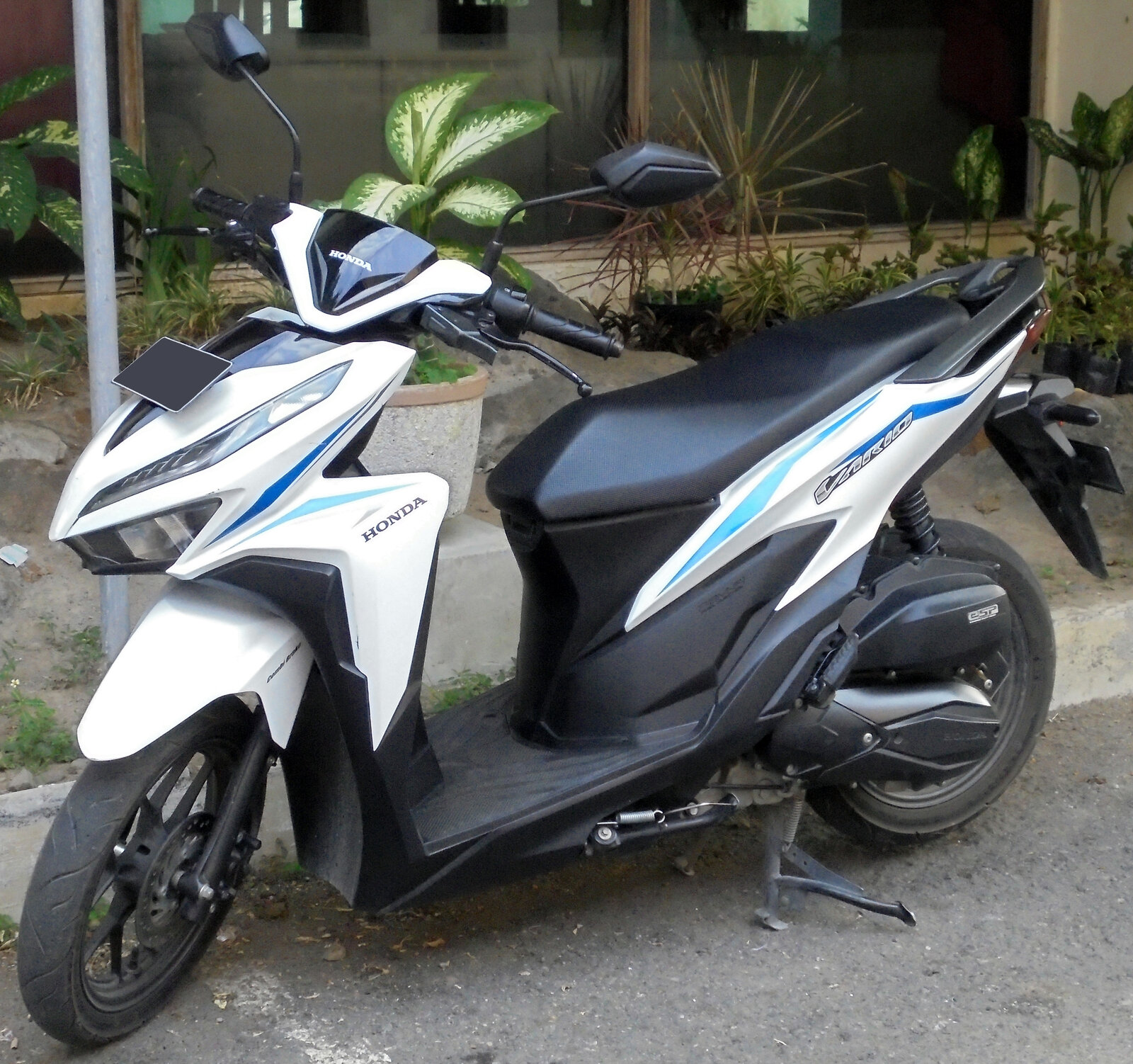
Throttle Body (Fuel Injection) vs Carburetor: How Each Works, and Which Is Actually Better
FI vs carb isn't just old vs new — the two systems measure and deliver fuel completely differently. Here's exactly how each works, and where each one genuinely has the edge.
MySpeedParts Team
· 4 min read
How a carburetor actually works
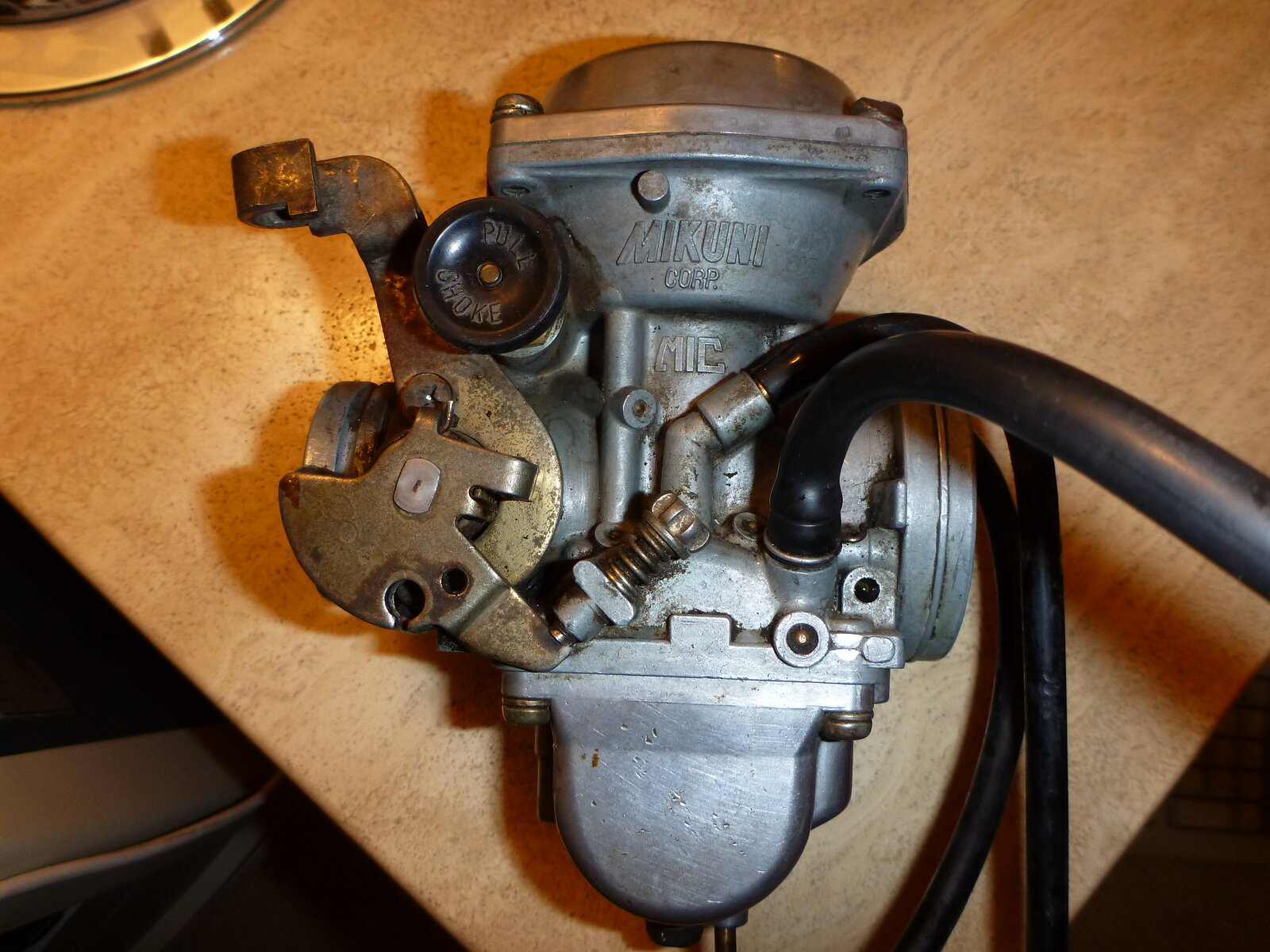
A carburetor is a purely mechanical fuel-metering device built around a venturi — a narrowed section of the intake tract. As the engine draws air through this narrowing, the air speeds up and its pressure drops (a direct application of Bernoulli's principle). That pressure drop is used to draw fuel out of calibrated jets — a pilot/idle jet for low throttle openings, a main jet for higher throttle, and often a tapered needle that fine-tunes the fuel curve in between.
Photo: Wusel007 — Wikimedia Commons (CC BY-SA 3.0)
Because a carburetor's metering is entirely physical (jet sizes, needle taper, spring rates), it needs no battery or sensors to run — which is why some race and off-road bikes still favour a simple carburetor for reliability in electronics-hostile environments. But that same fixed physical design means it cannot automatically compensate for changing air density (altitude, temperature, humidity) or a gradually wearing engine — riders have to manually re-jet for significant changes.
How a fuel-injection throttle body works
A throttle body in a fuel-injected system still uses a butterfly valve to control how much air enters the engine, but it doesn't meter fuel itself — that job goes to the ECU (Engine Control Unit) and one or more fuel injectors. The ECU continuously reads sensors including:
- Throttle Position Sensor (TPS) — how far the throttle butterfly is open
- Intake Air Temperature (IAT) sensor — denser cold air needs more fuel for the same ratio
- Manifold Absolute Pressure (MAP) sensor or airflow sensor — how much air is actually flowing
- Oxygen (O2) sensor — measures actual exhaust composition to fine-tune the mixture in real time
Using this data against a stored fuel map, the ECU calculates exactly how long to open the injector (pulse width) to deliver the right amount of fuel for current conditions — recalculated many times per second, not fixed by a physical jet size.
Side-by-side
| Carburetor | Fuel injection (throttle body) | |
|---|---|---|
| Fuel metering | Physical, fixed (jets, needle, venturi vacuum) | Electronic, adaptive (ECU + injector pulse width) |
| Adjusts for altitude/temperature | No — needs manual re-jetting | Yes — automatically via sensor feedback |
| Cold starting | Needs choke, can be inconsistent | Generally easier and more consistent |
| Fuel economy and emissions | Less precise, generally worse | More precise, generally better |
| Needs electrical system to run | No | Yes |
| Field/trackside tuning tools | Screwdriver, spare jets | Laptop and tuning software (for real changes) |
| Typical use today | Small/simple engines, some race and off-road bikes | Essentially all modern road-going motorcycles |
Where FI has a genuine, practical edge
For almost any daily-ridden bike, fuel injection wins on the things that matter day to day: it starts more reliably cold, idles more consistently, doesn't need re-jetting when you ride up a hill station or through changing weather, meets modern emissions requirements a carburetor simply cannot, and generally returns better fuel economy because the mixture is only ever as rich as the engine actually needs at that instant. This is exactly why virtually every new motorcycle sold today, from a Y15ZR to a superbike, uses fuel injection rather than a carburetor.
Where a carburetor still has real appeal
A carburetor's appeal isn't nostalgia — it's genuine mechanical simplicity where that matters. A basic carburetor can be rebuilt, cleaned, or re-jetted anywhere with hand tools, requires no diagnostic laptop, and has no electronic failure mode (no dead ECU, no corroded sensor connector, no software glitch). For some racing classes and off-road/expedition use where field-serviceability with minimal equipment is genuinely valued over precision, this is a real, not merely sentimental, advantage.
FAQ
Q: Is fuel injection always more powerful than a carburetor? Not inherently — peak power depends far more on the rest of the engine's tune (compression, cam, head flow, exhaust) than on the fuel delivery method alone. FI's real advantage is consistency and precision across conditions, not a guaranteed power increase.
Q: Can I convert a carbureted bike to fuel injection? It's possible with a standalone ECU, throttle body, injectors, and the required sensors and wiring, but it's a substantial project, not a simple bolt-on — most riders only do this for a serious, dedicated build.
Q: Why do some race bikes still use carburetors? Simplicity and field-serviceability with basic tools, and in some racing classes, carburetors are specified by the rules to keep costs and complexity down.
Q: Does a carburetor need any adjustment for altitude? Yes — riding at significantly different altitude changes air density, and a carburetor's fixed jet sizes may then deliver too rich or too lean a mixture, requiring a manual jet change. Fuel injection compensates for this automatically via its sensors.
References: general carburetor and electronic fuel injection engineering principles as documented in motorcycle service manuals and automotive/motorcycle engineering references.
Frequently Asked Questions
Is fuel injection always more powerful than a carburetor?+
Not inherently — peak power depends far more on the rest of the engine's tune than on the fuel delivery method alone. FI's real advantage is consistency and precision across conditions.
Can I convert a carbureted bike to fuel injection?+
It's possible with a standalone ECU, throttle body, injectors, and required sensors and wiring, but it's a substantial project, not a simple bolt-on.
Why do some race bikes still use carburetors?+
Simplicity and field-serviceability with basic tools, and in some racing classes, carburetors are specified by the rules to keep costs and complexity down.
Does a carburetor need any adjustment for altitude?+
Yes — riding at significantly different altitude changes air density, and a carburetor's fixed jet sizes may deliver too rich or too lean a mixture, requiring a manual jet change.